How Technology Makes Your Budtenders Better (Not Redundant)
When dispensary operators start seriously evaluating self-service kiosks or customer-facing mobile apps, the conversation often arrives at the same place: what does this mean for my staff? If customers can check in, browse, and check out on their own, do I need fewer budtenders?
The short answer is no, and the longer answer explains why the dispensaries that frame this question correctly end up with better staff performance and better customer outcomes.
What Budtenders Are Actually Good At
A great budtender does something that no kiosk or app can replicate: they read people. They pick up on the nervousness of a first-time customer and slow down. They notice that someone seems to be dealing with something hard and recommend accordingly. They make a joke that lands and turn a transaction into a memory.
This is high-value work. It's the kind of interaction that creates regulars and generates referrals. It's also work that gets crowded out when the same budtender is handling twelve transactions an hour during a Friday rush.
Technology handles the transactional volume. The best budtenders handle the human connection. These aren't competing functions. They're complementary ones.
What Technology Should Be Doing Instead
Think about the time a typical budtender spends on purely mechanical tasks: checking customers in, confirming ID, walking someone through a menu they could have browsed at home, processing payment. None of this requires empathy, product expertise, or interpersonal skill.
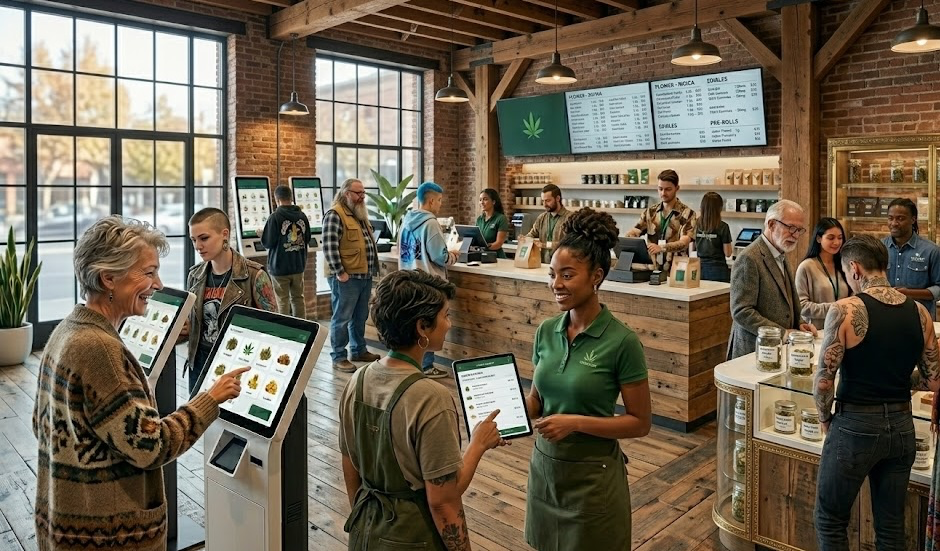
Self-service kiosks absorb the customers who don't need hand-holding. When those customers route themselves through a kiosk, the customers who do need help get more of a budtender's actual attention. The interaction quality goes up for everyone.
The Data Advantage for Budtenders
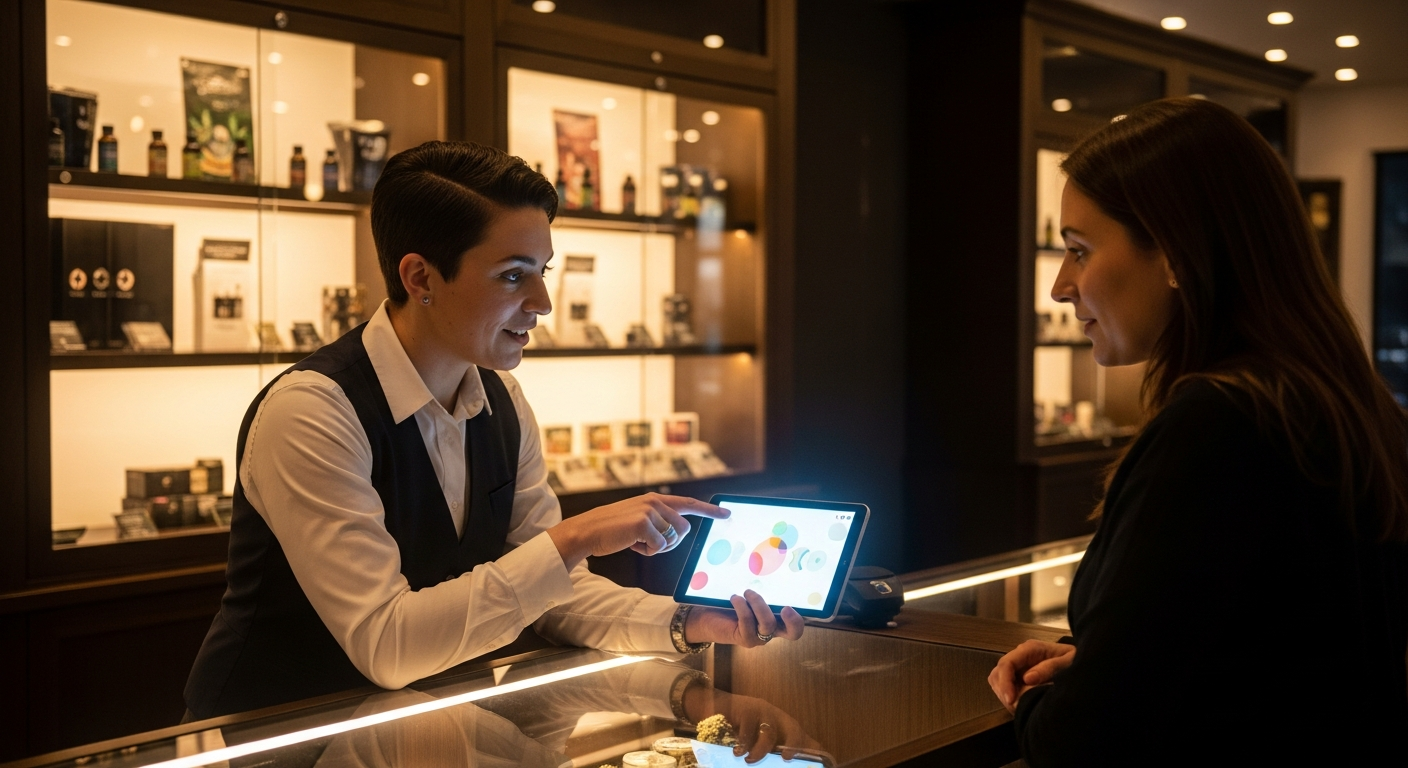
A budtender who can see, at a glance, that the customer in front of them has purchased the same sativa strain eight times in the last three months is a budtender who can have a completely different conversation than one starting from scratch.
This kind of personalized interaction is what high-end retail has always promised and rarely delivered. In cannabis, with the right technology infrastructure (a mobile app that captures purchase history, a POS that surfaces it at the point of sale) it's genuinely achievable for every customer interaction.
Training Staff to Work With the Technology
The dispensaries that see the biggest gains from kiosk and app adoption are the ones that bring their staff along rather than around the technology. A regular in a hurry gets pointed toward the kiosk. A first-timer who seems overwhelmed gets the full budtender consultation.
It also requires leadership framing that makes clear: this technology is here to help you do your job better, not to replace you. The dispensaries with the best technology adoption rates are the ones whose operators communicated that message clearly and consistently.
The future of cannabis retail isn't automated or human. It's both, working together intelligently.